The Hidden Operating System
By: Ramon P. Lllamas, La Soupe Volunteer
Every organization has an operating system.
Some are formal—process maps, org charts, policies, layers of approvals. Others are harder to see. They exist in relationships, personalities, trust, and the unwritten rules people absorb simply by spending enough time inside a place.
La Soupe has both.
The formal systems matter, of course. They’re part of the reason the organization works at scale. Volunteers onboard smoothly. Production lines move efficiently. Food safety standards are clear. Meals consistently get produced, packaged, and distributed throughout the region. From the outside, it would be easy to conclude that operational discipline is the primary reason the organization succeeds.
But after spending time inside the system, it became obvious that those processes aren’t the full story.
The real operating system is human.
You start to notice it in the people who quietly hold everything together—not through authority, but through awareness. Not because they sit at the top of a hierarchy, but because they understand the rhythms of the organization and the personalities inside it.
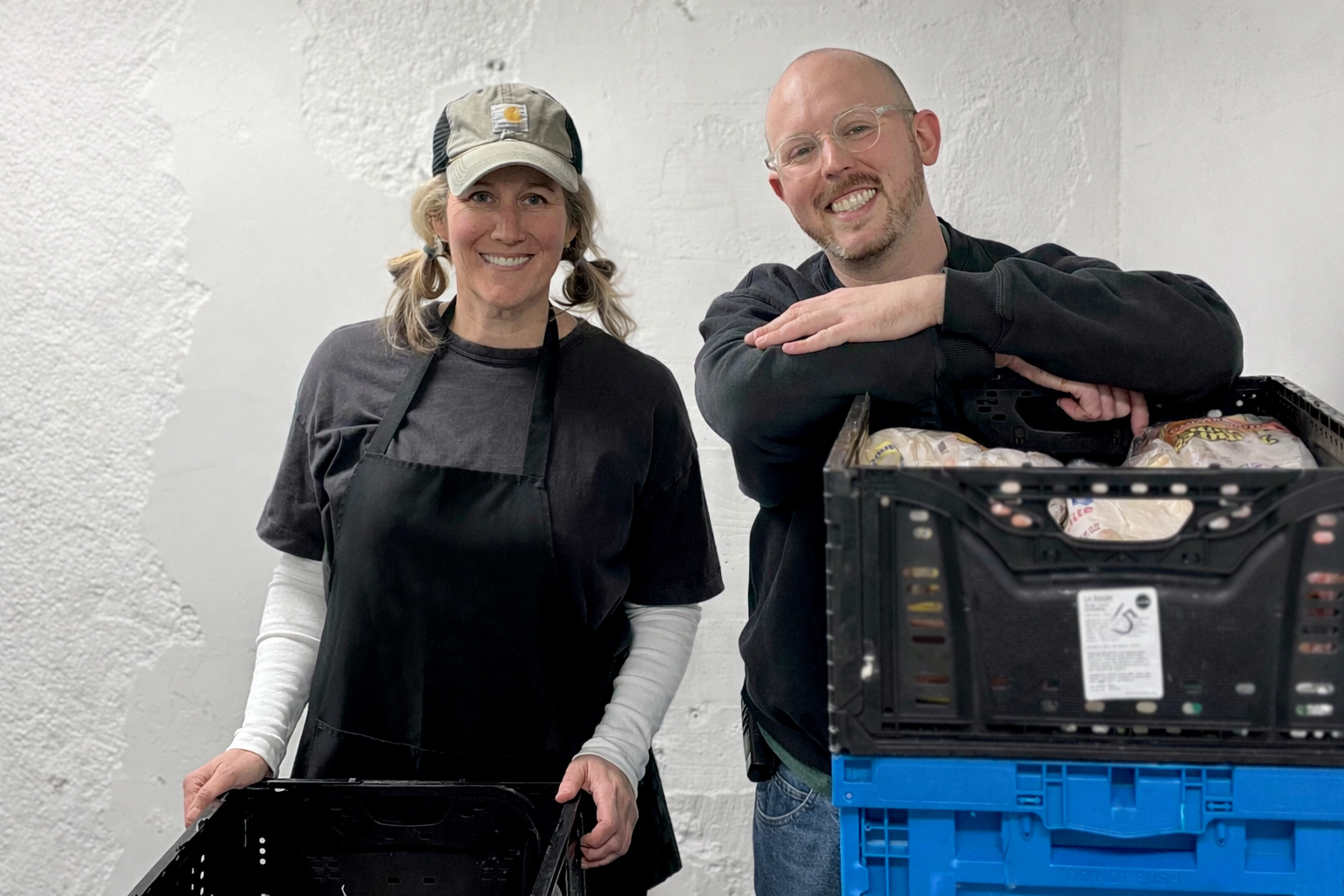
Kara is one of those people.
She jokingly describes herself as a “hardcore volunteer,” but that framing undersells what she actually does. After years of volunteering, she stepped into a temporary coordinator role during a staff transition. What stood out wasn’t simply her ability to manage logistics—it was her ability to manage people.
And there’s a difference.
She seems to know everyone in the building: the kitchen team upstairs, the production line downstairs, the dock crew, leadership, the regular volunteers, and the first-timers trying to figure out where they fit. More importantly, she understands how all of those groups interact with one another.
She knows who needs encouragement and who responds better to humor. She knows which volunteers can take initiative immediately and which ones need a little more direction before they feel comfortable. She knows when to step in operationally and when to let people work through something on their own.
Most organizations would struggle to formally define that role because so much of it is relational rather than procedural. But the system depends on it.
At one point, Kara described herself as “the personality hire,” joking that many of the visiting college students were studying STEM-related fields while her own background was less technical. The comment was funny, but it also missed something important.
Because what she actually possesses is a different kind of intelligence entirely: social awareness, operational intuition, stakeholder management, and the ability to navigate both official and unofficial dynamics simultaneously. She understands the politics of the room without making the room political. That’s a rare skill.
What makes it even more interesting is that her influence doesn’t come from formal authority. In fact, she regularly jokes that she has “no real authority” at all.
And yet, systems like La Soupe don’t function well without people like her.
Every high-functioning organization eventually develops two structures: the visible one and the real one. The visible structure is easy to map—titles, reporting relationships, departments. The real structure is built on trust. It’s reflected in who people actually listen to, who can calm tension, who connects disconnected groups, and who notices problems before they escalate.
That hidden infrastructure is often what determines whether an organization can adapt under pressure or fall apart the moment conditions become unpredictable.
Chef Alae plays a similar role downstairs on the production line.
Operationally, he oversees the flow of production. Culturally, he sets the tone.
Music plays throughout the shift. Energy stays high. Volunteers who arrive nervous or unsure of themselves usually relax within minutes. During one shift, an entire group of students visiting from the University of Memphis ended up singing along to “I Want It That Way” by Backstreet Boys while producing hundreds of family meal trays. At another point, Ali was teaching students dance moves in the middle of the production line.
“You have to slide on this line.”
On paper, none of that sounds operationally important. In reality, it’s part of why the operation works.
People perform differently when they feel connected to the environment around them—especially volunteers. Most organizations focus almost entirely on efficiency, but systems built entirely around efficiency eventually become emotionally sterile. People disengage. Participation becomes transactional.
La Soupe somehow avoids that.
The work remains productive, but the environment stays human. That balance is difficult to manufacture intentionally, which is part of what makes it so interesting to observe in practice.
It also explains why people keep returning.
A retired engineer shows up on Mondays after a career in steel manufacturing. A restaurant owner jokes that volunteering at La Soupe is his “weekly therapy.” Students completing community service hours end up competing to break sandwich-making records. Volunteers who arrive as strangers leave with job leads, new relationships, and a sense that they contributed to something tangible.
The organization feeds people, but it also creates belonging.
Not through forced team-building exercises or carefully curated networking events, but through shared work. Through repetition. Through showing up consistently enough that familiarity slowly turns into trust.
That’s the part many organizations miss.
Culture isn’t created through mission statements hanging on walls. It emerges through repeated interactions, small rituals, shared experiences, humor, and stewardship built over time. It emerges when people consistently experience an environment where their contribution matters.
Once that culture exists, it becomes self-reinforcing. Regular volunteers train newcomers without being asked. People step into gaps automatically. Responsibility becomes distributed rather than centralized, and the organization develops resilience because the system no longer depends entirely on top-down control.
It begins to self-organize.
That may be why La Soupe feels less like a traditional nonprofit and more like an artist collective that happens to operate with the efficiency of a high-functioning company.
The operational systems matter. But the human systems are what make the operation sustainable.
And in many ways, that hidden operating system may be the hardest thing to replicate elsewhere.
You can duplicate kitchens. You can document logistics. You can build production lines. But reproducing trust, stewardship, and shared ownership is far more complicated. Those things have to be lived into existence.
As AI continues automating more forms of work and interaction, I suspect environments like this will become increasingly important—not because they reject technology, but because they preserve something technology cannot fully replace: the experience of humans organizing together around a shared purpose in real time.
And that may ultimately be the infrastructure that matters most.
Ramon stepped in as Interim Volunteer Coordinator at La Soupe and continues to share his time with us as a regular volunteer. His series, Field Notes, offers a unique perspective of the work we are doing at La Soupe from behind-the-scenes. Learn more about Ramon and the exciting work he engages in to help others on his blog.