
La Soupe Welcomes Inaugural Guest Chef Gabi Odebode, Fosters Culinary and Cultural Education
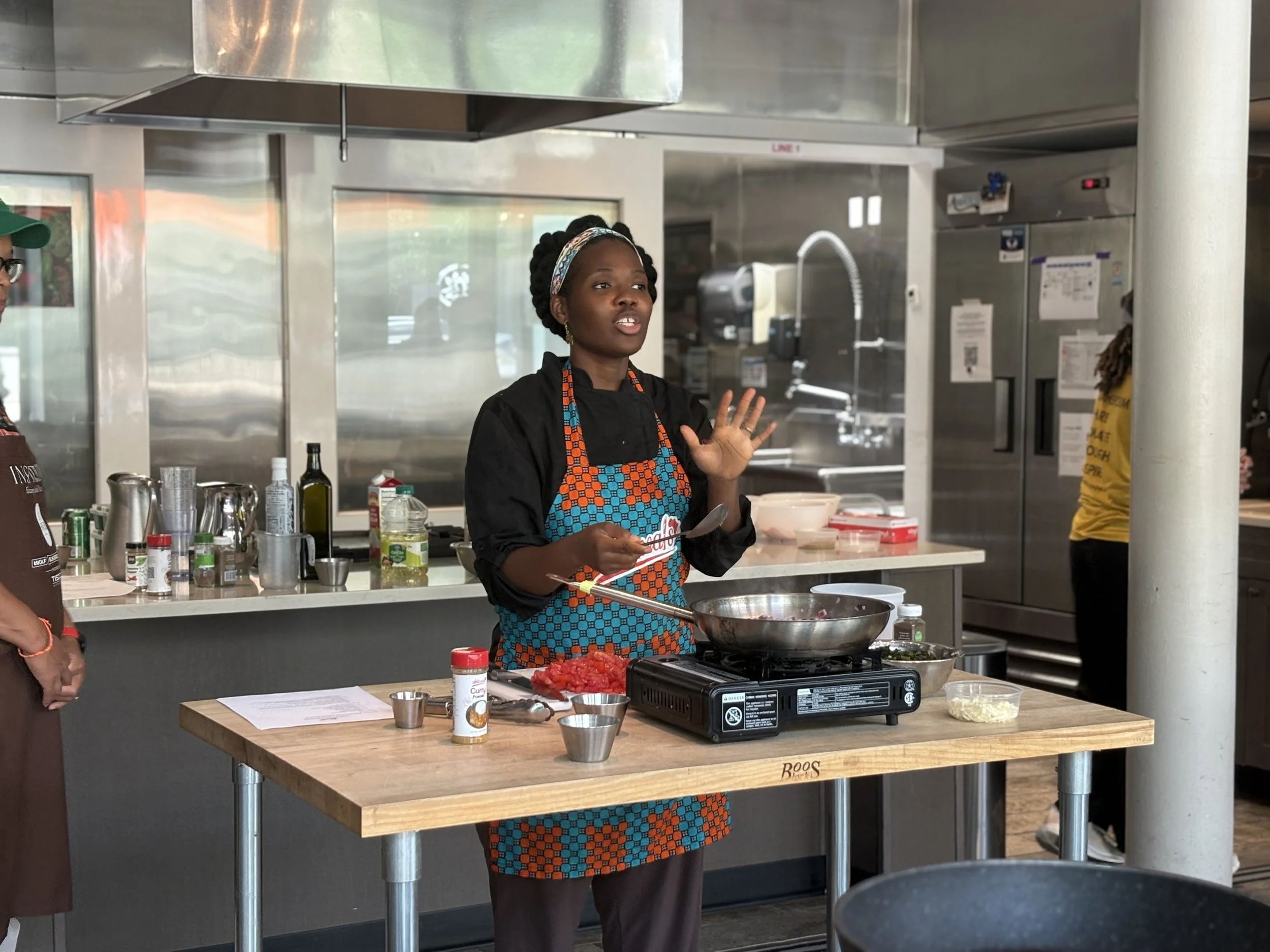
Chef Gabi Odebode, owner of Afromeals, addresses participants during her special Cooking Improv workshop on Aug. 8.
For Chef Gabi Odebode, the power of a “good meal” extends far beyond the dinner plate.
Odebode, who owns an African and Caribbean-inspired culinary company called Afromeals, believes sharing culture through cooking is one crucial way to combat food insecurity. On Aug. 8, she became the first-ever guest chef to teach a class at La Soupe’s commissary kitchen.
Under Odebode’s watchful eye, attendees prepared two dishes with roots in Kenya and Jamaica: Sukuma Wiki, an East African staple primarily composed of sautéed collard greens, and a creamy “Rasta Pasta” served with jerk chicken.
Following this savory crash course, made possible by rescued ingredients, we spoke with Odebode to learn more about her background and future goals with La Soupe. Here’s what she had to say.
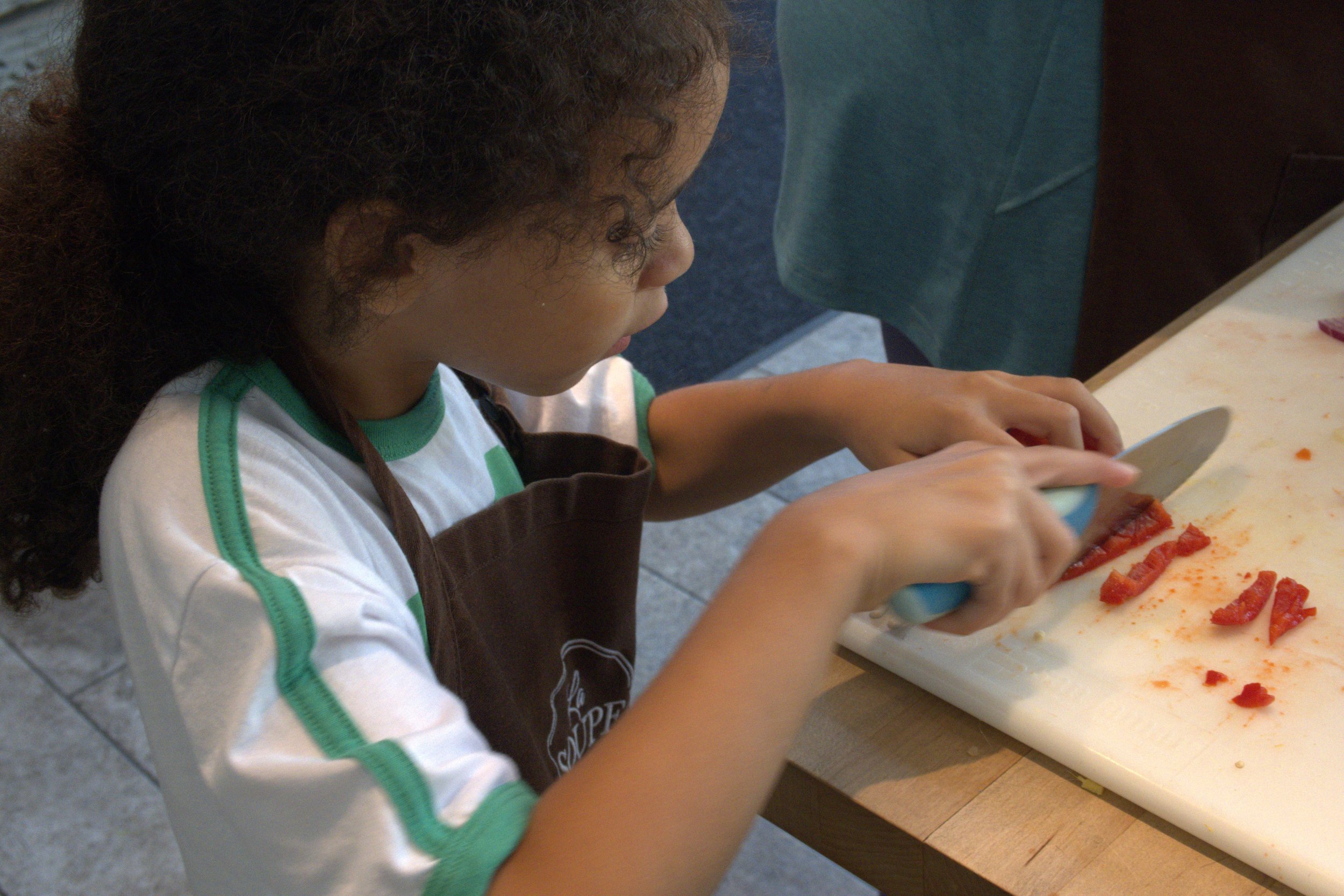
A young participant practices cutting vegetables during Chef Gabi Odebode’s Cooking Improv workshop on Aug. 8.
Cultivating Taste
Before immigrating to the United States at age 9, Odebode lived in Ghana, where passing down traditional recipes is an integral part of home life.
Having restaurant and bakery owners on both sides of the family, Odebode developed a deep-seated passion for cooking, which continued to bloom when she took a dedicated food and nutrition class during her high school years.
Fast-forward to the present day, and Odebode has matured into a proud business owner. Through Afromeals, she offers various cooking tutorials and catering services, also selling specialized spice blends and housemade snack items.
While teaching at La Soupe, Odebode said she was particularly struck by one parent’s decision to bring their kids to her lesson. Knowing that she helped children strengthen the same skills that fuel her success—including attention to detail, creativity and mental resilience—feels gratifying.
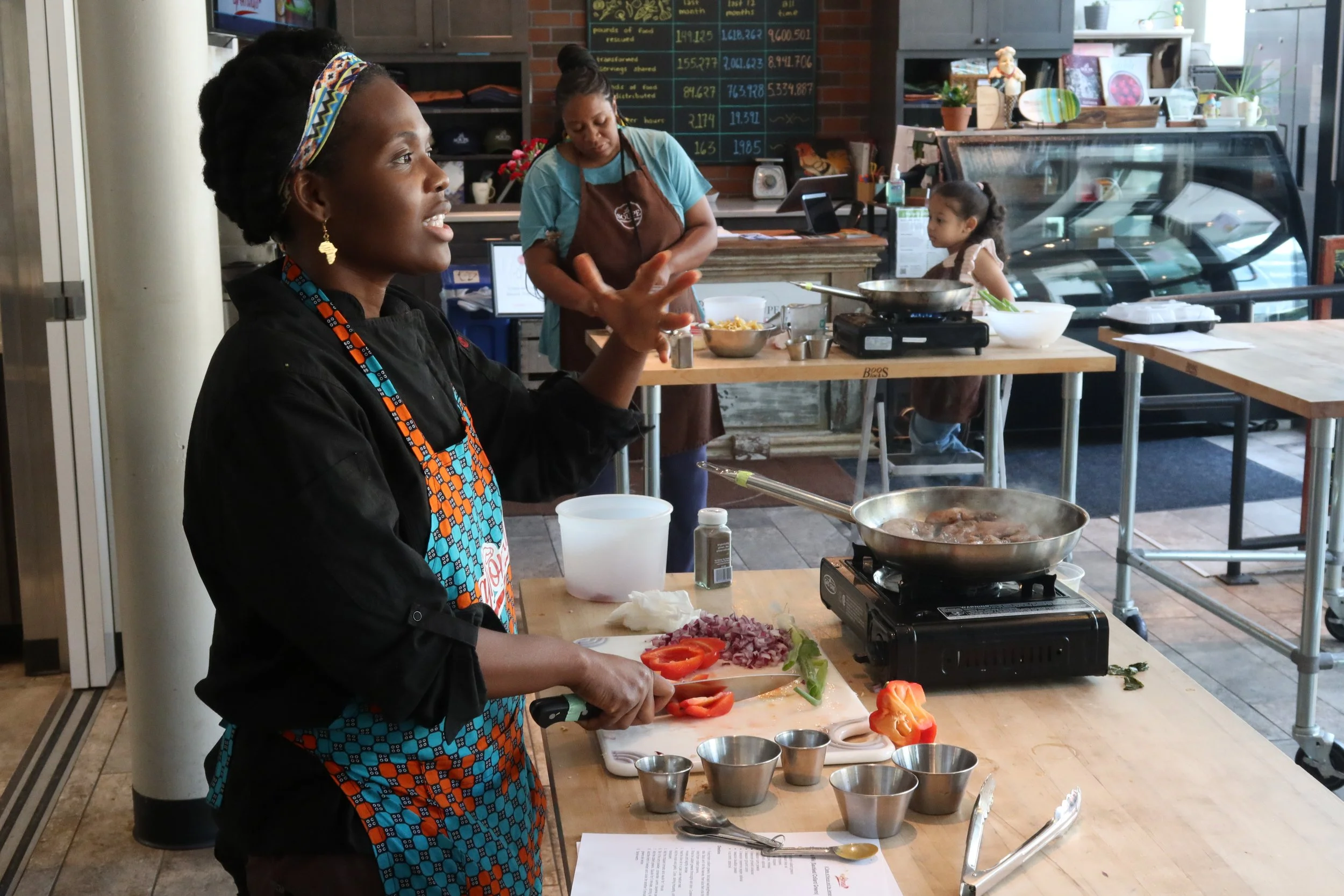
Chef Gabi Odebode addresses those gathered at her Cooking Improv workshop on Aug. 8.
Notably, age isn’t the only barrier to food security that Odebode’s class aimed to address. She also strove to narrow the knowledge gap regarding how to plan and execute nourishing meals, specifically inclusive ones.
By sharing recipes that spotlight Kenyan and Jamaican cuisine, Odebode proved that home cooks can harness international flavors using a select handful of accessible ingredients. In addition, she believes that empowering people who might feel disconnected from their ancestral heritage to explore their own cultural dishes is a worthwhile, nutritious cause.
“It’s important to keep in mind that there’s certain people that are still experiencing food insecurity because they don’t have their culturally relevant meals,” Odebode said.
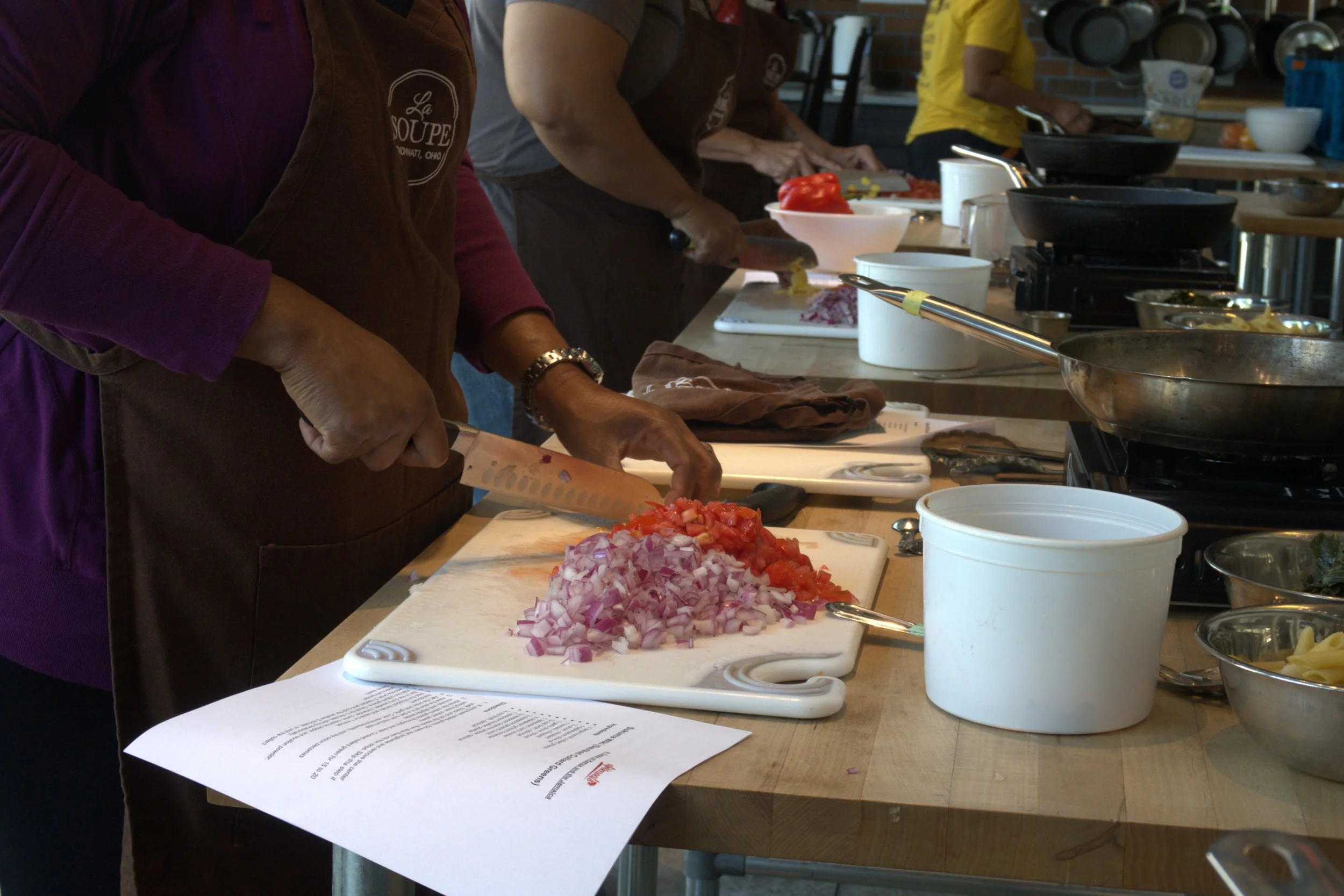
Attendees chop vegetables during Chef Gabi Odebode’s Cooking Improv workshop on Aug. 8.
Visions of Change
Ultimately, Odebode considered her workshop to be a smashing success. Previous collaborations with Cincinnati Museum Center and Miami Valley Meals, the latter of which is a member of La Soupe’s Rescue Kitchen Network®, gave her the confidence to teach in an unfamiliar kitchen.
“It was a great experience overall,” Odebode said. “There were no challenges that came up, because this is what I do, so it came really easy to me.”
The key to any successful working relationship is mutual trust and respect, and Odebode said she feels that with La Soupe.
“This is a partnership,” Odebode said. “It’s not just me coming to take over, or them just telling me ‘This is what you need to do.’ I love that collaborative aspect of it.”
Looking ahead, Odebode wants to continue partnering with the nonprofit in new and meaningful ways, especially when it comes to providing instruction on culturally relevant meals. She also hopes to host food drives that serve Cincinnati’s Ghanaian, Mauritanian, and Congolese communities, among others.
For additional details surrounding La Soupe’s culinary education opportunities, click here.